
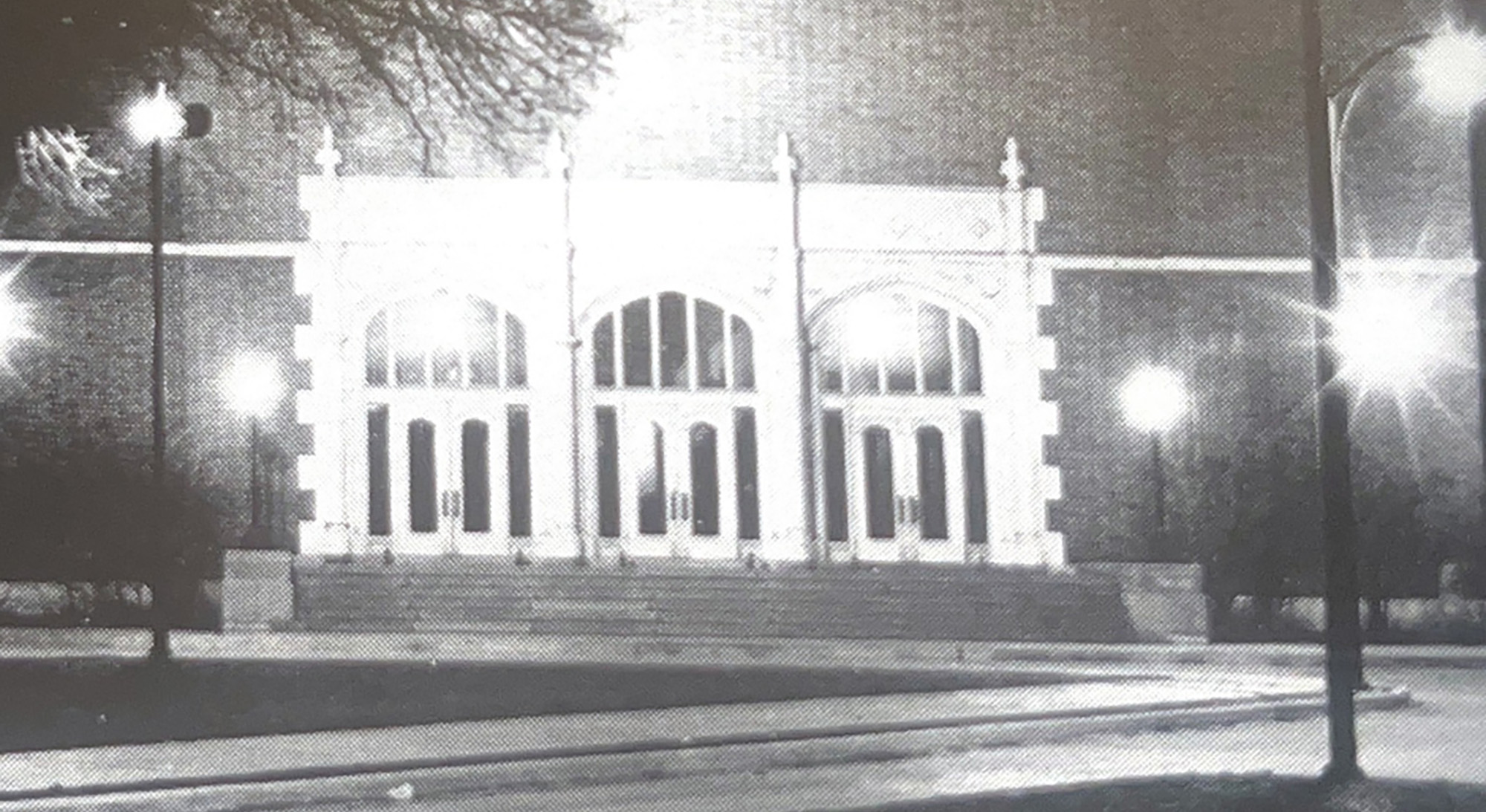
The 1950s marked a formative decade for Belleville Junior College. It was a period defined by post-war growth, community advocacy, and the early groundwork for what would become a major higher-education institution in Southwestern Illinois.
From Modest Beginnings to Rapid Growth
When the decade began, Belleville Junior College was still a modest operation, an extension of the local high school district educating only a few hundred students. Like many post-WWII junior colleges in Illinois, it was responding to a rising demand for education from veterans and young adults eager for new opportunities. By 1957, enrollment had swelled to roughly 1,200 students, reflecting both the national surge in community-college attendance and the college’s growing importance in the region.
A College Without a Campus
Despite Belleville Junior College’s steady growth, the college still lacked a dedicated physical campus. Throughout the 1950s, classes were held in former Army barracks or repurposed spaces within the high school. Although this arrangement was far from ideal, it highlights just how grassroots the early years of Belleville Junior College truly were.
The limitations of these facilities along with the growing student population, would eventually becoming the catalyst for a broader push for expansion.


A Community Pushes for Higher Education
By the mid-1950’s, local leaders recognized that southern Illinois needed greater access to affordable higher education. In 1955, the local leaders formed the Southwestern Illinois Council for Higher Education (SWICHE). It was a citizen-led effort to plan for the region’s educational future. This new founded group hit the ground running spreading their mission, with its efforts to convince educational leaders in the state. In addition, the group contacted state officials, leading to them hiring a consultant to help document the region’s educational needs.
Laying the Groundwork: Land and Vision
A pivotal moment arrived in 1958, when SWICHE launched a major fundraising effort to purchase land for a new campus. This wasn’t just a real-estate purchase, it was a declaration that the region deserved its own, fully realized college campus. The land acquisition would later prove essential in the college’s transformation into a distinct, independent institution.
Fueling this effort was the 1957 See-Myers report, which revealed that Madison and St. Clair Counties had some of the lowest college-attainment rates in the state. The report crystallized a growing belief among local leaders: expanding educational access wasn’t simply beneficial, but it was urgently necessary.
The Legacy of the 1950’s
Looking back, the 1950’s were far more than a period of growing enrollment and makeshift classrooms. They were the decade in which Belleville Junior College rooted itself in the community. Serving post-war educational needs, inspiring civic advocacy, and planting the seeds of a regional college system that would grow to serve tens of thousands.
Today, Southwestern Illinois College stands as a testament to that early vision. The story of the 1950’s reminds us that even the largest institutions often begin with borrowed spaces, determined students, and a community that believes in the power of education.
