General information
Preparing students
The Southwestern Illinois College Sign Language Studies/Interpreter Training program prepares students to work as interpreters for the Deaf or hard of hearing community.
You’ll have Deaf instructors and language immersion environments for all of your first year courses. During the second year your instructors are working interpreters who share their first-hand knowledge of the profession. We also provide monthly signed events for more language immersion opportunities!
While the foundation of the curriculum is a commitment to American Sign Language, the professional sign language interpreter is a service provider who must be able to adjust to a broad range of consumer preferences for interpretation along a broad spectrum of communication.
There is high demand for interpreters
There is high demand for interpreters in various settings, both locally and nationally.
Sign Language interpreting is a rapidly expanding field, with employment of interpreters and translators projected to increase 18 percent through 2026 by Labor Statistics.
A shortage of interpreters and translators meeting the desired skill level of employers means that interpreters for the Deaf will continue to have favorable employment prospects.
TRANSFER OPPORTUNITIES
SWIC welcomes transfers from any program and does not have out-of-state fees.
Our Sign Language courses are eligible for foreign language credit, subject to the approval of the school you may be transferring to.
Why Choose Sign Language Studies at SWIC?
SWIC’s Sign Language Studies graduates work and live in both Illinois and Missouri. Our program has NO OUT OF STATE TUITION FEES!
In the Metro-East area, there are two different certification tests that graduates can take to become employable. Both tests are meant to challenge the candidates.
Since these tests are rigorous, the need for retakes is not atypical. The average pass rate for both tests is higher among SWIC graduates than the general public.
The BEI, the Board of Evaluation of Interpreters. This certification allows an interpreter to work in both Illinois and Missouri in K-12 and community settings.
- Average General Public BEI Pass Rate in Illinois: 38% (2019)
- Average General Public BEI Pass Rate in Texas: 48% (2019-2022 average)
- Average SWIC graduate BEI Pass Rate: 63% (5-year average from 2019-2023)
The EIPA, the Educational Interpreter Performance Assessment – This certification limits interpreting to the K-12 settings in Illinois. The highest possible score is a 5.0. Passing is 3.0 or above in the state of Illinois. Our passing rates are above the national average.
- National General Public EIPA Pass Rate (3.0 or above): 55% (2018)
- SWIC’s EIPA Pass Rate (3.0 or above): 88% (5-year average from 2019-2023)
Why should I
study Sign Language?
Join the
Sign Language Club
Occupational
Outlook
Areas of study offered
ASSOCIATE IN APPLIED SCIENCE DEGREE
This is a 67-credit-hour, two-year degree program which can be completed in four semesters and consists of:
- 15 credit hours of general education courses
- 52 credit hours of sign language courses
The curriculum includes communication, social science, SLS interpreting technical courses and assigned field experiences.
General Education Courses
CERTIFICATE
This is an 21-credit hour, two-semester certificate program consisting of sign language courses only.
Those who want a concentrated program of study in only Sign Language courses may enroll in the certificate program. Upon successful completion of the required courses, the student is awarded a certificate of program proficiency.
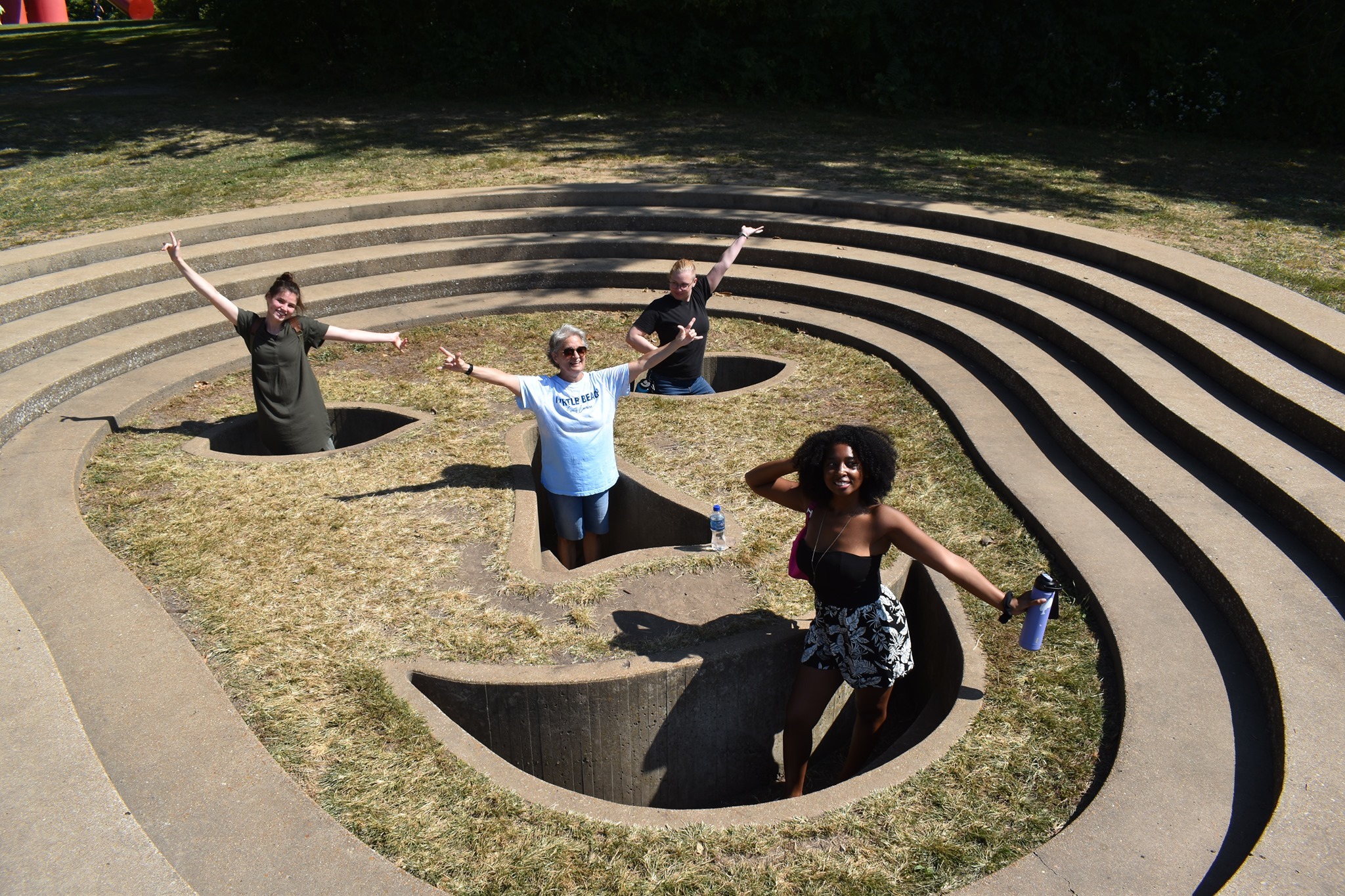
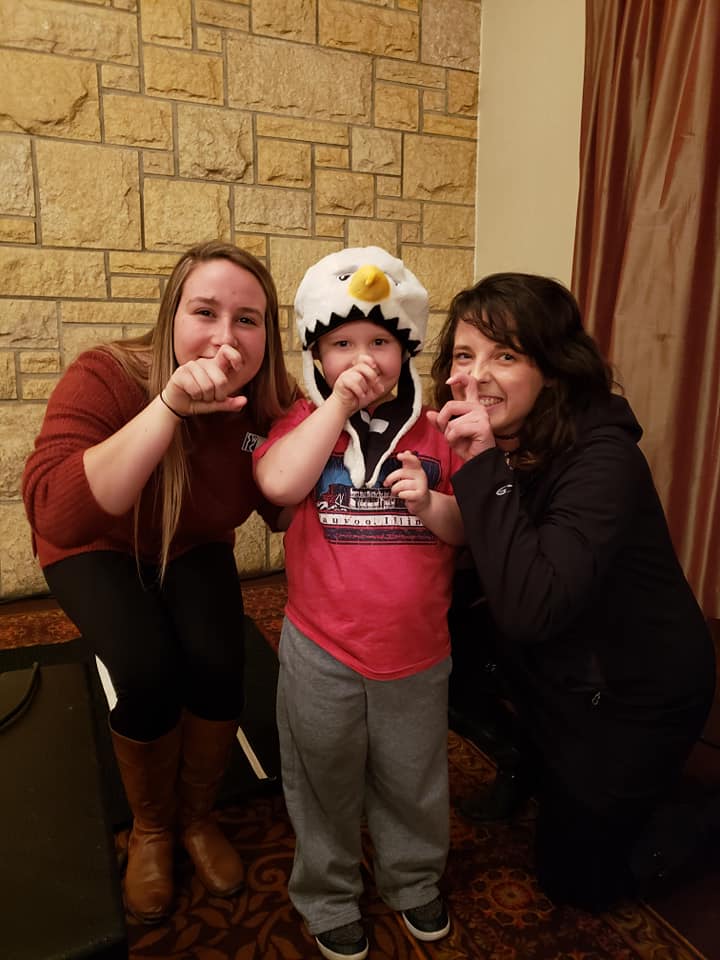
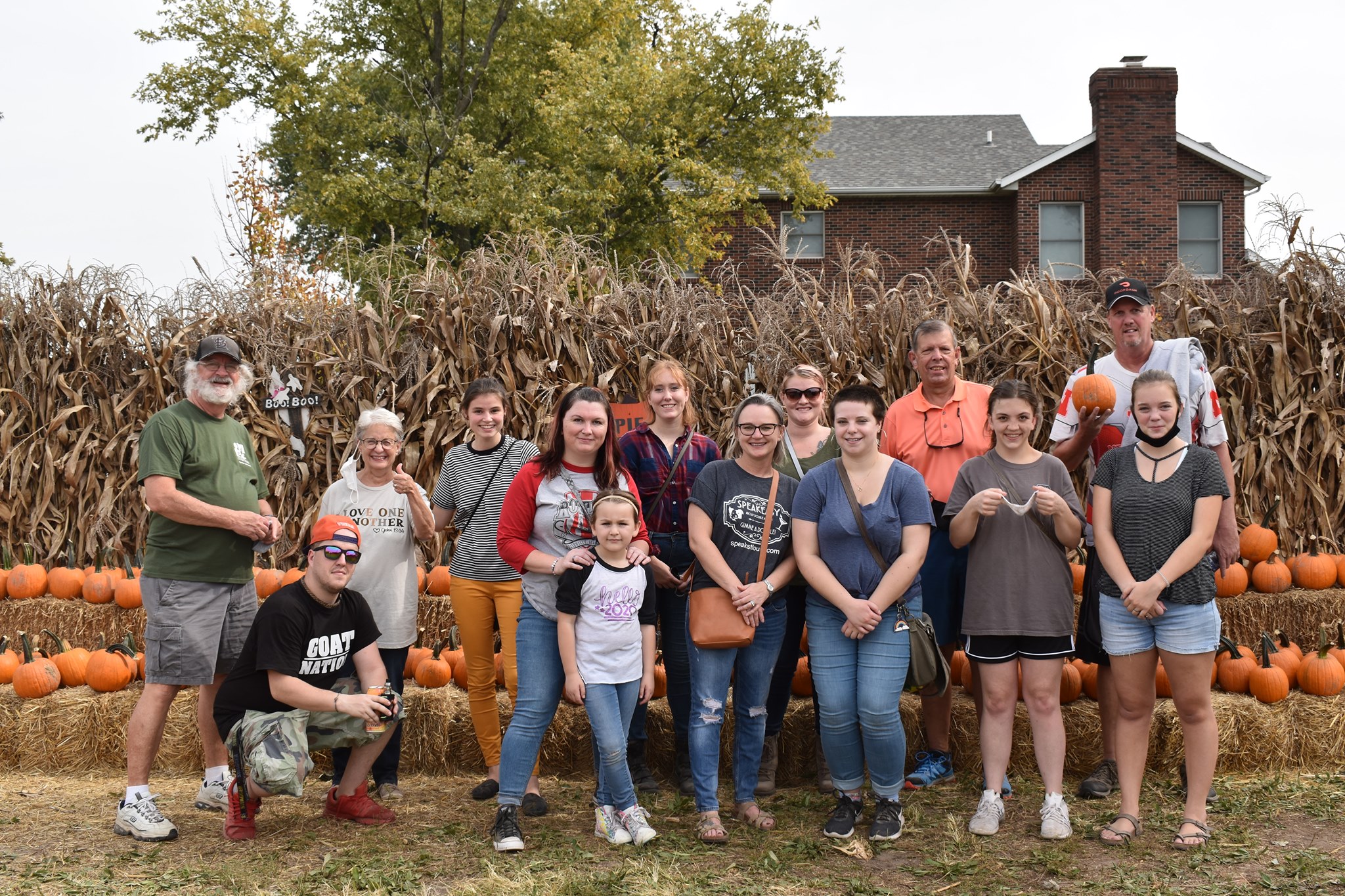
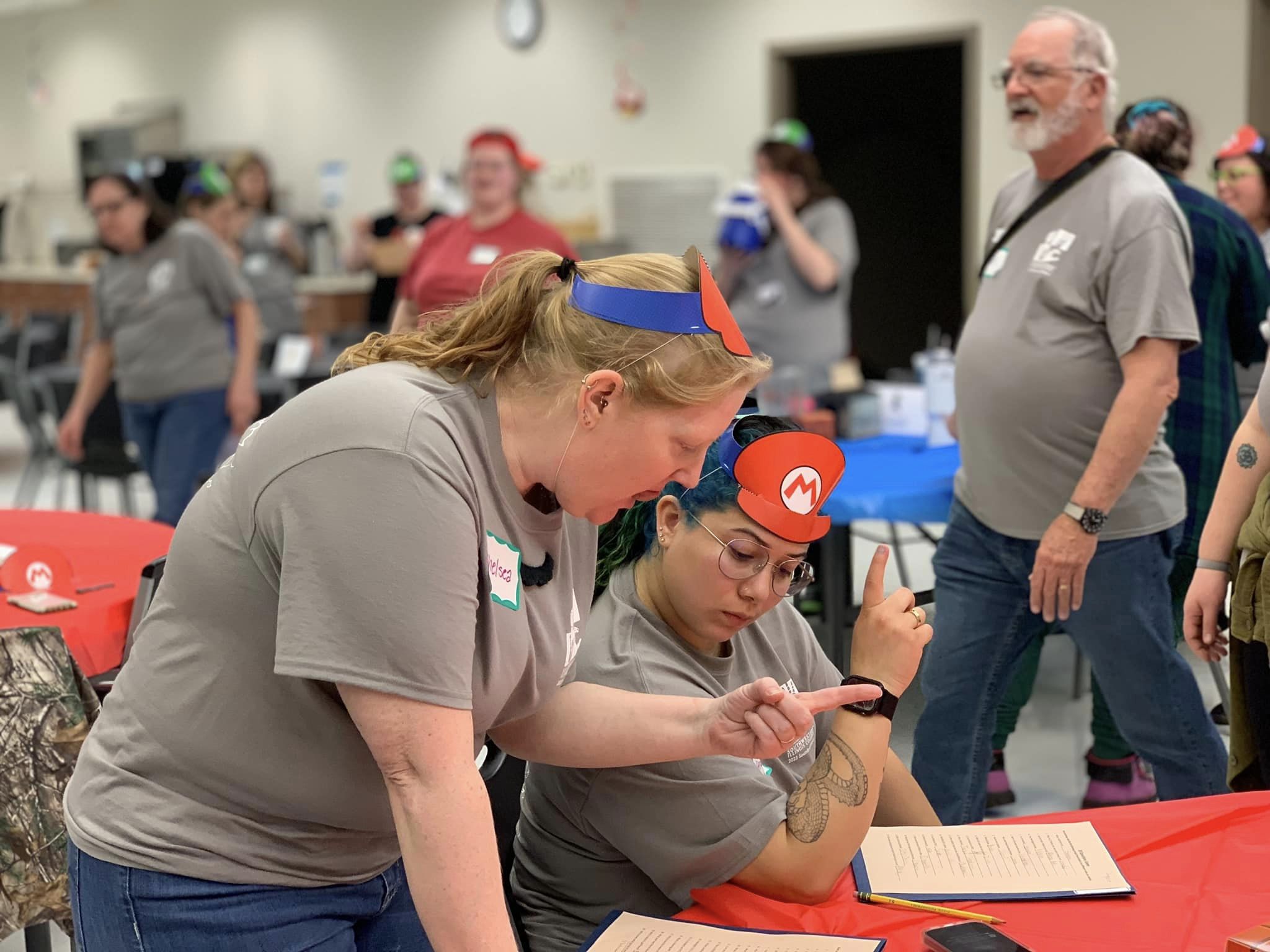
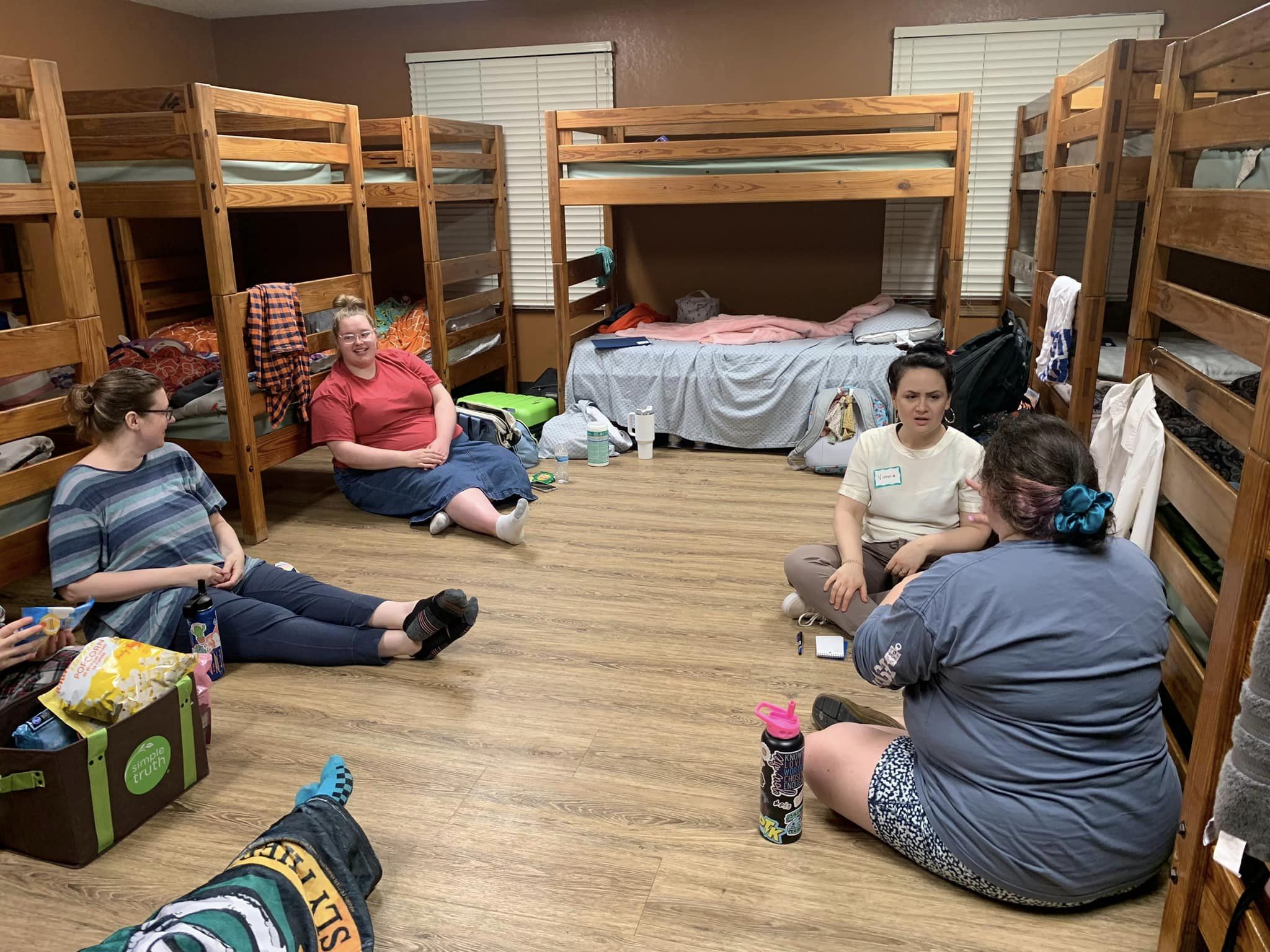
Join Us For Our Sign Language Studies Events
Program Location
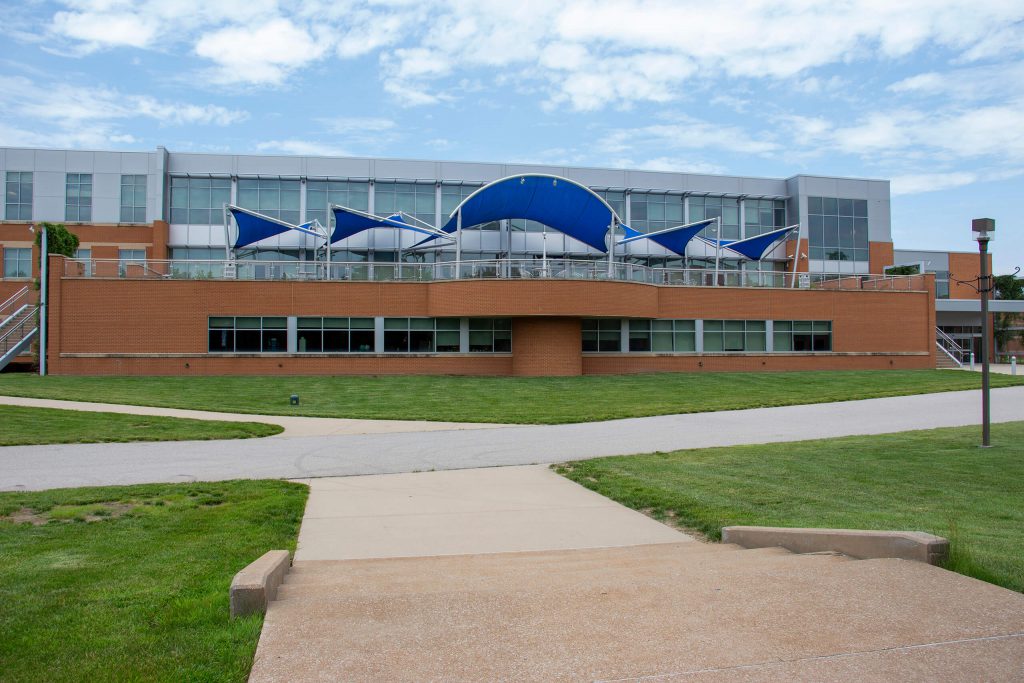
All of our program courses are in person on the Belleville campus. We do have one online “Conversational Sign Language” class (SLS 103). The Sign Language Studies degree program consists of general education courses, SLS pre-fix courses, and field experiences.
The certificate program consists of SLS pre-fix courses and field experiences. Specific course locations depend on the course type.
GENERAL EDUCATION COURSES
General education courses required for the degree program can be taken at the Belleville, Sam Wolf Granite City, or Red Bud campuses.
FIELD EXPERIENCES AND PRACTICUM COURSES
Field experience courses are completed off-campus at various deaf/hard-of-hearing community events.
Students will be required to travel outside of the college district for field experience courses, SLS 101, SLS 102, SLS 203, SLS 206, and SLS 230 and may be required to have background checks and/or drug testing prior.
Time Commitment
PARTICIPATION AND PRACTICE
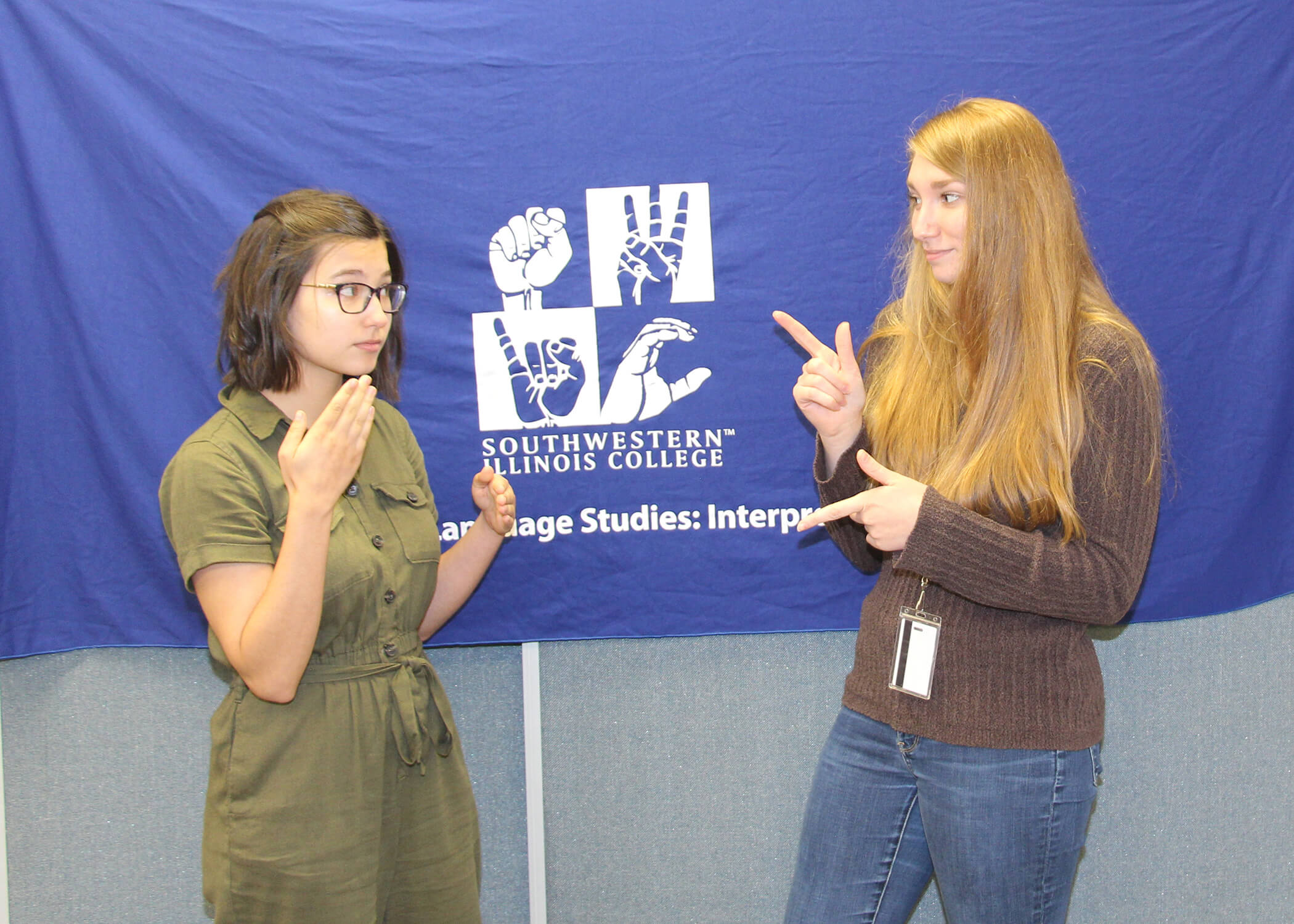
Time, dedication, study, immersion in the deaf/hard-of-hearing community and constant practice is required to develop proficiency in signing and interpreting. The level of skill students attain is directly related to their participation and practice.
STUDY TIME
For each hour of class time spent in lecture, students should plan to spend two hours outside of class for study time, homework, and completing assignments. For each hour of class time spent learning skills, students should spend an equal amount of time outside of class practicing those skills.
ATTENDANCE
Students should check the location and schedule of classes to ensure their own availability and access. Students are responsible for their own transportation and attendance at any of the classes and field experience/practicum assigned by the program.
Certification Requirements
Missouri and Illinois require interpreters to hold the BEI certification (Board of Evaluation of Interpreters) in order to be eligible for a license.
The state of Illinois has an option of testing for the EIPA (Educational Interpreter Performance Assessment) for the K-12 setting, and RID hosts the National test, NIC (National Interpreter Certification).
The SLS curriculum prepares graduates for each of these exams and helps our students decide which options fit best with their career goals.
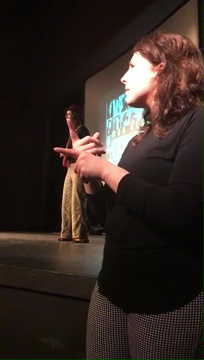
Sign Language Studies Services
Our students and interns interpret in the community for class credit and hands-up opportunities. If you would like a student/intern at your event you may use the request form below, and then return to evaluate the student interpreters. Student interpreters are provided for low impact jobs that would not require a certified interpreter and are based on the students’ availability.